Paediatrician Emmanuel Nellen explains why some children and adolescents are more susceptible to infections and what parents can do to strengthen their child’s resilience to infections.
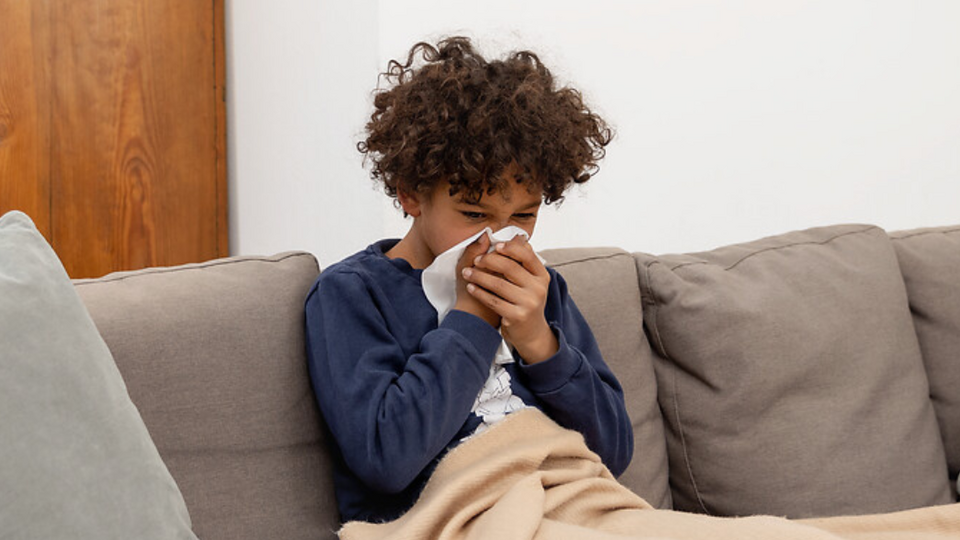
Often ill, a constant stuffy nose or cough: This is a familiar picture for many parents with primary- or secondary-school-aged children. At what point is a child considered to be particularly susceptible to infection? What is the underlying cause if adolescents or children are ill more often and more severely than their peers?
The paediatrician Emmanuel Nellen explains the possible causes of frequent infections, when the child needs to see a doctor and what measures help strengthen their immune defences and their airways.
Emmanuel Nellen: That is not easy to answer, because it always depends on which infections are currently circulating. Generally speaking, however, children and adolescents are particularly susceptible to infection if they are ill six or more times a year. This equates to an infection roughly every two months. That is when I would start talking about increased susceptibility to infections.
Emmanuel Nellen: Children and adolescents who are more susceptible to infection generally take longer to recover. Recovery in these cases can take two to three weeks longer. One of the reasons for this is that children and adolescents develop more severe symptoms than their peers.
Let’s take RSV (respiratory syncytial virus) as an example: This causes severe symptoms, especially in infants and toddlers, while in slightly older children and adolescents, RSV infections are harmless. This is a different matter in children and adolescents who are susceptible to infection. Despite their age, they have atypically severe symptoms.

Emmanuel Nellen: There are two different reasons. Firstly, children and adolescents with chronic respiratory diseases are often more susceptible to infection. You also have to mention genetic predisposition here too. If the parents or grandparents, for example, had a tendency towards asthma, that can be hereditary and may manifest as susceptibility to infections. A tendency to develop frequent infections may also be caused by an enlarged adenoid or other anatomical abnormalities in the upper airways that hamper normal nasal breathing and the ventilation of the paranasal sinuses.
And secondly, what we refer to as noxious substances have a role to play. These are, generally speaking, harmful substances or circumstances that can trigger or exacerbate an illness. This includes situations where someone smokes in a household or other place where a child or adolescent spends a lot of time. Mould, dust or animal hair – all potential allergens – can result in children being ill all the time. It is important to test if the child or adolescent has an allergy. And finally, an immune deficiency may be the reason behind the frequent infections.
Emmanuel Nellen: An immune deficiency generally becomes apparent in infancy. If it is suspected, the child is tested. There are markers that are then out of range in these tests. Children with immune deficiencies usually develop very severe infections at an early age: For example, they struggle with severe pneumonia, sometimes sepsis, which lands them in hospital.
Children with immune deficiencies sometimes fail to thrive – depending on which substrates are missing from the body. These can be substituted. A specialist clinic tests for immune deficiencies. We call these immunological outpatient centres, and the children are then under their care. They receive treatments tailored to their specific immune deficiency.
Emmanuel Nellen: Children and adolescents who are prone to infections should seek medical advice promptly and not leave it for days or weeks before they do so. Fever is a warning sign here. By that point, these children and adolescents should see their doctor.
Particular caution is also advised in children and adolescents with chronic respiratory diseases. Seek prompt medical advice, and it goes without saying that at the first sign of infection, the normal treatment regimen should be stepped up.
Ideally, children and adolescents with asthma, cystic fibrosis or similar, should have a peak flow meter at home to measure their maximum exhalation speed and thus the width of their airways. If the results are significantly lower than usual, this can indicate an infection and the treatment should be initiated at an early stage.
These children and adolescents – and also those who do not have any pre-existing conditions – should ensure they have a healthy lifestyle, drink plenty of fluids, get enough sleep and go out in the fresh air. As parents, you can be role models and follow this advice too.
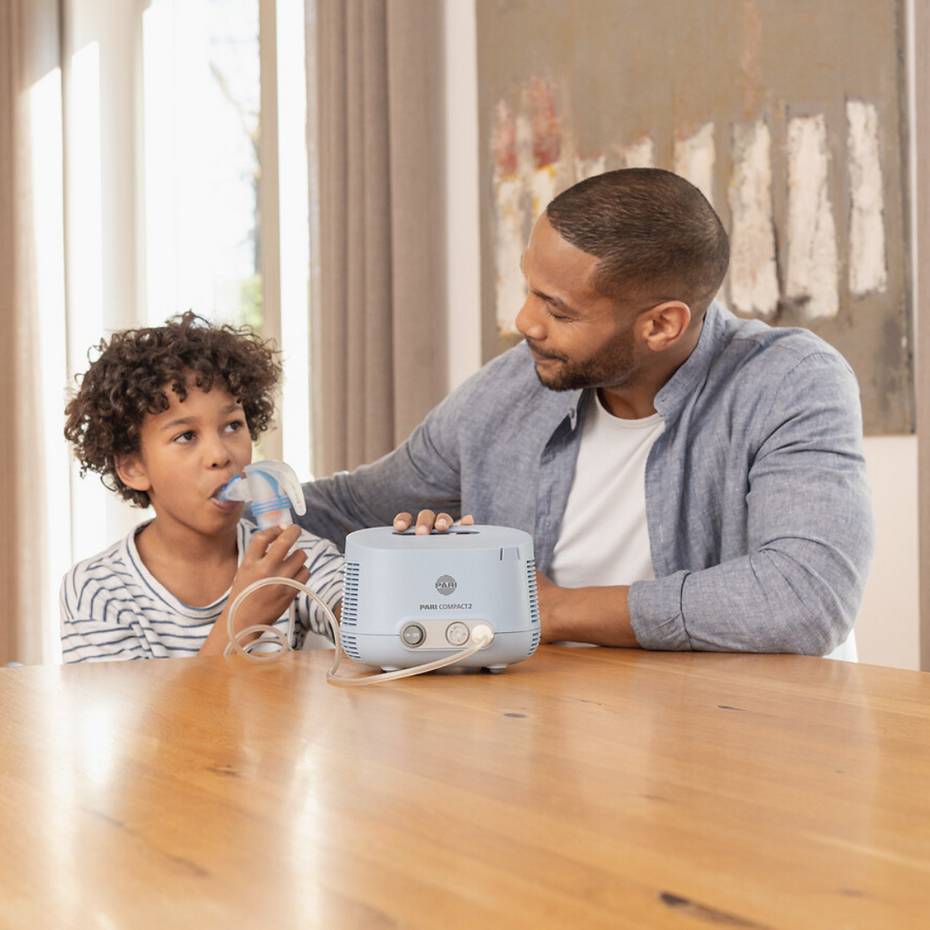
Emmanuel Nellen: Some people swear by nasal douches. It can be helpful but can also be perceived as unpleasant. Not all children tolerate it. Inhalation therapy with hypertonic saline solution can be beneficial for children and adolescents who are susceptible to infection – especially when the illness makes them produce a lot of mucus.
Here, inhalation with hypertonic saline solution helps liquefy the secretions and make them easier to cough up. At the same time, hypertonic saline solution can be perceived as irritating; nonetheless it helps mobilise the mucus and makes it easier to discharge it from the bronchial tubes.
Emmanuel Nellen: It is important that all children and adolescents are fully vaccinated and have had all their boosters. You should follow the recommendations of the STIKO. This is especially important for children and adolescents who are susceptible to infection; the flu jab may also be added in consultation with the paediatrician. Here, it is important to note that vaccinations protect against disease and also help protect others.
Last year showed how important full vaccination coverage is and what the consequences can be when vaccination rates decline. There were extraordinarily high numbers of whooping cough, which according to the RKI (the Robert Koch Institute, the German government agency responsible for disease control and prevention) was down to poor vaccination rates and waning vaccination protection.
Emmanuel Nellen is a specialist in paediatric and adolescent medicine with his own practice in Ostfildern. After training as a medical technical radiology assistant, he studied medicine in Heidelberg-Mannheim and qualified in 2006 when he did his state exams. He then worked as a junior physician at the Stadt Hanau Clinic, at the Verbundkrankenhaus Bernkastel-Wittlich and the Reutlingen Regional Clinics. From 2014 to 2016 he was employed as a paediatrician in a practice in Rechberghausen.
Note: The information in this blog post is not a treatment recommendation. The needs of patients vary greatly from person to person. The treatment approaches presented should be viewed only as examples. PARI recommends that patients always consult with their physician or physiotherapist first.
