The paediatrician Emmanuel Nellen gives tips and remedies for boosting the immune system to stave off sniffles, coughs & colds.

Is your child ill all the time? The paediatrician Emmanuel Nellen explains how simple, preventative remedies can boost the immune system and how the right airway care can prevent your child getting infections.
To strengthen your child’s immune defences, the paediatrician Dr Nellen recommends focusing on a few simple everyday habits.
“[Children and adolescents] should ensure they have a healthy lifestyle, drink plenty of fluids, get enough sleep and go out in the fresh air. As parents, you can be role models and follow this advice too.”
Emmanuel Nellen
Paediatrician
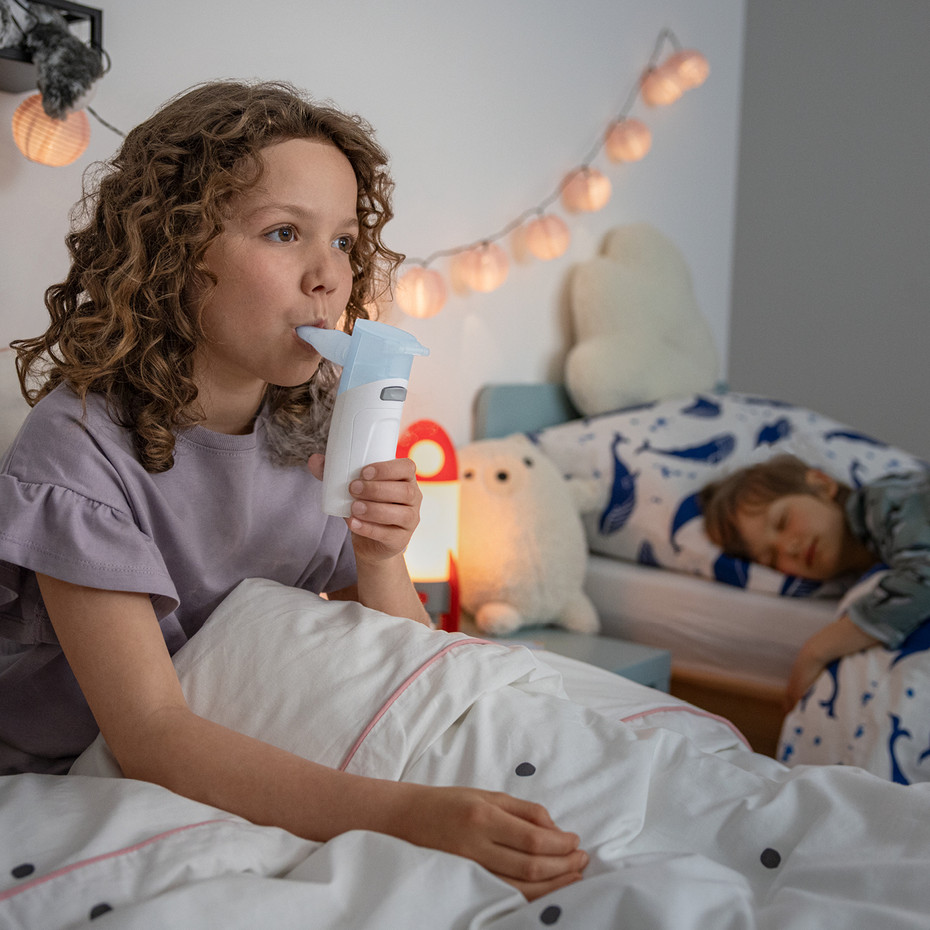
Especially if children tend to have too much mucus, physical methods can help keep their airways healthy.
“Some people swear by nasal showers. It can be helpful but can also be perceived as unpleasant. Not all children tolerate it. Inhalation therapy with ectoin or hypertonic saline solution can be beneficial for children and adolescents who are susceptible to infection – especially when the illness results in large quantities of mucus. Here, inhalation with hypertonic saline solution helps liquefy the secretions and make them easier to cough up. At the same time, hypertonic saline solution can be perceived as irritating; nonetheless, it helps mobilise the mucus and makes it easier to discharge it from the bronchial tubes.”
Emmanuel Nellen
Paediatrician
Harmful substances (noxious substances) in the environment may be the reason for the increased susceptibility to infections. The paediatrician therefore advises:
“What we refer to as noxious substances [can also play a role]. These are, generally speaking, harmful substances or circumstances that can trigger or exacerbate an illness. This includes situations where someone smokes in a household or other place where a child or adolescent spends a lot of time. Mould, dust or animal hair – all potential allergens – can result in children being ill all the time. It is important to test if the child or adolescent has an allergy.”
Emmanuel Nellen
Paediatrician

To prevent serious illness and to accelerate healing, you should prevent infections and not wait for a long time before you seek medical advice.
» Read the whole interview with the paediatrician Emmanuel Nellen: Is your child always ill? About the causes and solutions
Infections in children and adolescents can be prevented with a healthy lifestyle, full vaccination and support for the airways with measures such as inhalation therapy. With these steps, parents can actively help their children become less susceptible to infection.
Emmanuel Nellen is a specialist in paediatric and adolescent medicine with his own practice in Ostfildern. After training as a medical technical radiology assistant, he studied medicine in Heidelberg-Mannheim and qualified in 2006 when he did his state exams. He then worked as a junior physician at the Stadt Hanau Clinic, at the Verbundkrankenhaus Bernkastel-Wittlich and the Reutlingen Regional Clinics. From 2014 to 2016 he was employed as a paediatrician in a practice in Rechberghausen.
Note: The information in this blog post is not a treatment recommendation. The needs of patients vary greatly from person to person. The treatment approaches presented should be viewed only as examples. PARI recommends that patients always consult with their physician or physiotherapist first.
