What helps ease COPD? The physiotherapist Angelika von Esebeck believes in empowering patients to help themselves – with specific tips for consistent home-based therapy.
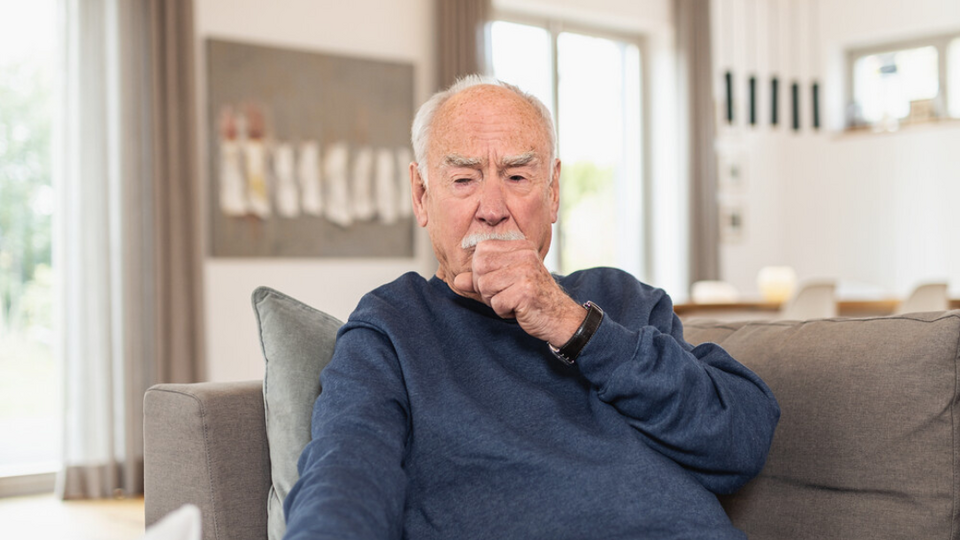
What can I do for my COPD? The physiotherapist Angelika von Esebeck has the following motto: Empowering patients to help themselves. Only consistent home-based therapy can help improve the symptoms of COPD. In a discussion she gives practical tips for daily routine with the chronic respiratory disease.
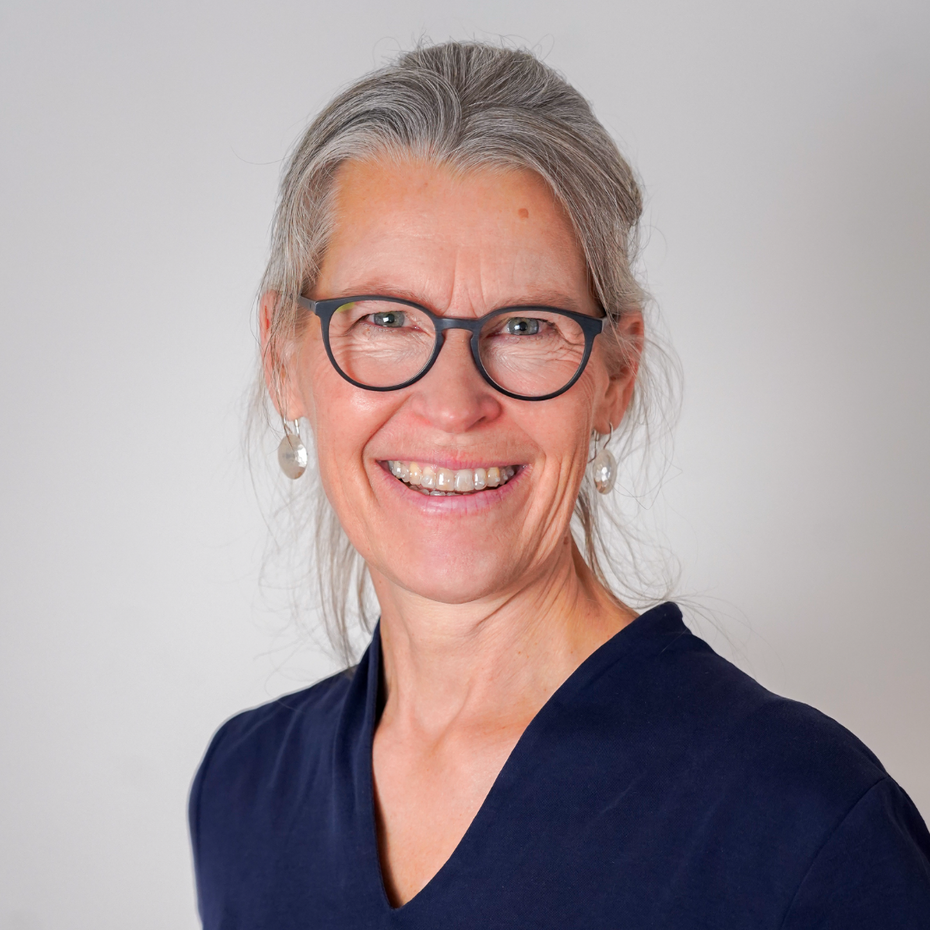
Angelika von Esebeck: With COPD, it is essential that patients do their therapy independently every day to relieve their symptoms and to slow down the progression of the disease. Ongoing treatment is often not necessary and can usually not be provided by practices specialised in respiratory physiotherapy anyway because they lack the capacity. We focus on providing people with acute airway difficulties and newly diagnosed patients with prompt treatment.
COPD patients therefore tend to have 6 treatment sessions at our practice and in this time, they learn all the relevant therapeutic techniques and measures to manage their functional problems. Depending on the severity of the disease, they have a follow-up after three to four months. The motivation to do something for their own health is essential.
Angelika von Esebeck: As each patient has different functional problems, such as coughing more, secretions or shortness of breath, we adjust the treatment to each individual patient. The core components are: inhalation training, secretion management, coughing control, managing shortness of breath, reducing hyperinflation of the lungs and diaphragm training.
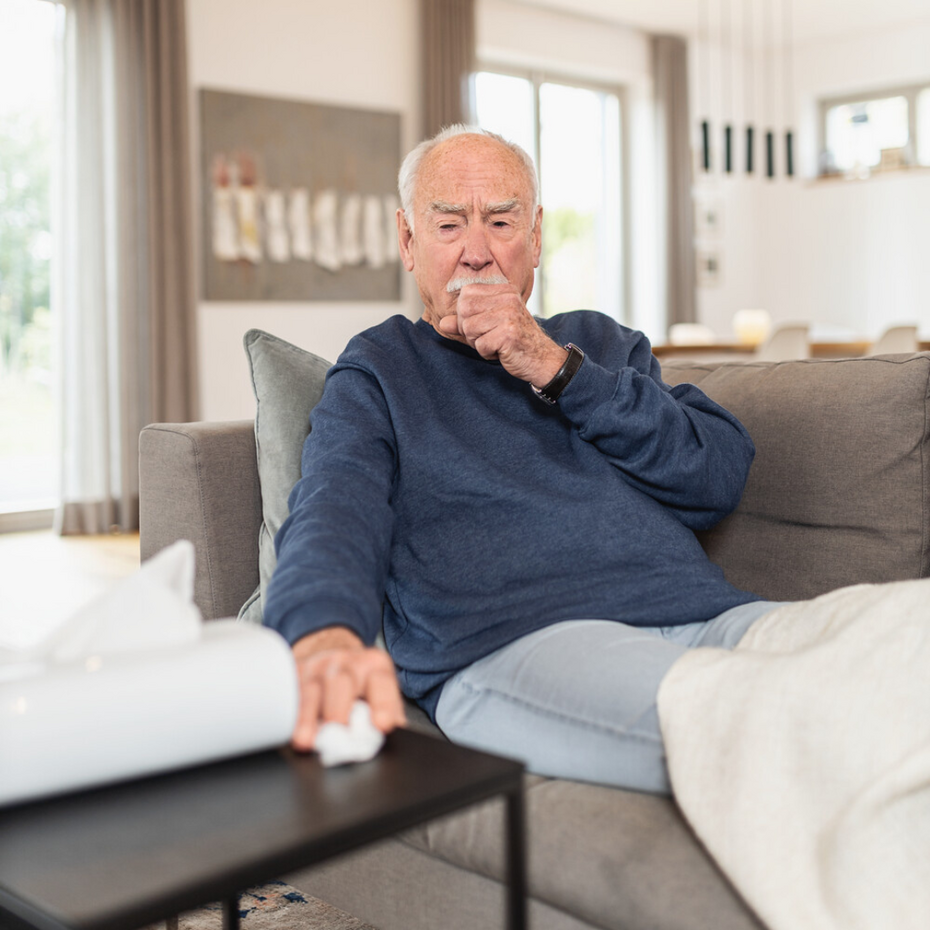
Angelika von Esebeck: First, we find out what type of cough the patient has. We distinguish between a productive cough (with mucus) and an unproductive and dry cough (with no secretions).
A dry cough is a troublesome symptom with major side effects. This is why it should be reduced as far as possible. The cough receptors in the larynx, in the trachea (windpipe) and in the large airways are irritated and should be soothed using cough-control techniques, such as breathing against a closed fist.
Other less specific measures such as drinking or swallowing can reduce the irritation. With a dry cough, it is important to note the important function of breathing through your nose, so that the bronchial tubes do not cool down and dry out. It takes a lot of discipline and motivation to change an ingrained habit (cough).
If the cough is productive, i.e. there are secretions in the lungs, it is important to distinguish between effective and ineffective coughing. Some people with COPD cough for many hours of the day and eliminate hardly any or no secretions because the secretions have not yet moved far enough up into the central airways.
The aim is only to cough once the secretions can be moved up out of the airways with a cough or a technique called “huffing”. However, this requires good preparation (mobilisation and transportation of secretions) in which we instruct our patients. They should avoid constant coughing.
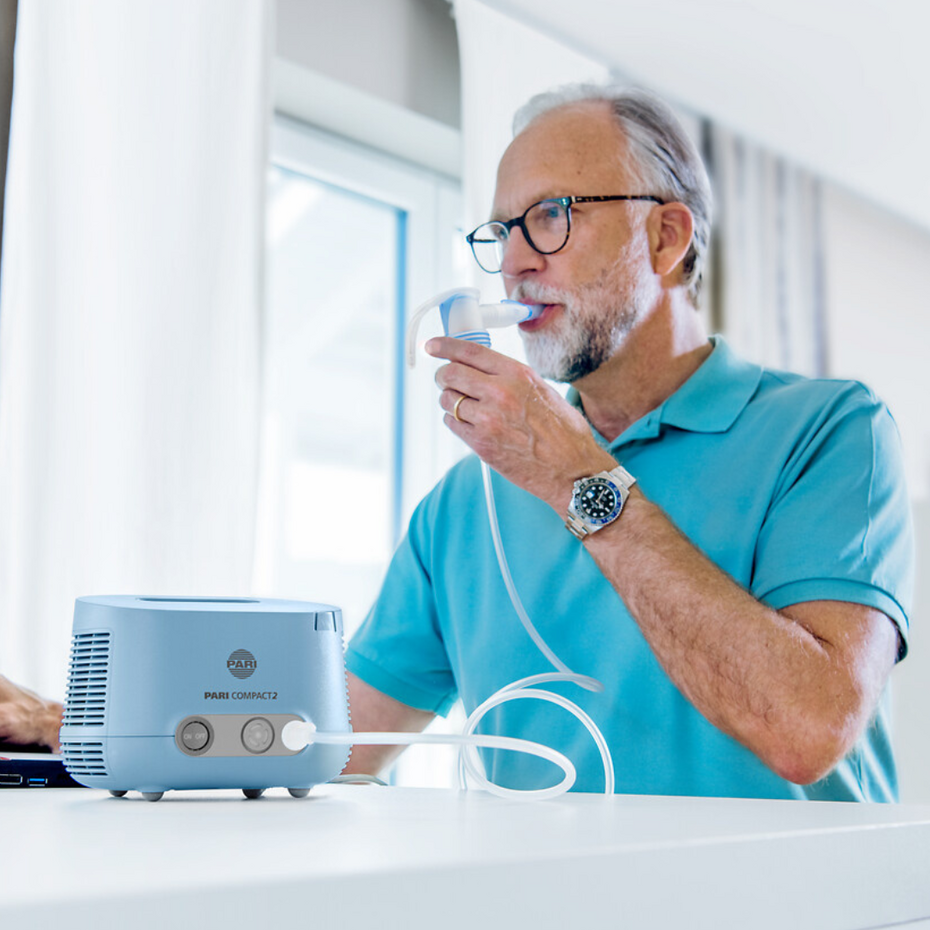
Angelika von Esebeck: This requires targeted secretion management. If the secretions are very stubborn and in the peripheral regions of the lungs, the first step is secretolysis. Special breathing techniques then mobilise the secretions and transport them towards the central airways. The secretions are only removed once this has happened.
If the mucus is deep and thick, it first has to become thinner (a process called secretolysis). To do this, we use two mechanisms of action. The first is osmosis. To achieve this, patients can inhale a hypertonic saline solution with a nebuliser. Remember: Inhalation with hypertonic saline solution should always be discussed with the patient’s doctor. They should always use a clean, dry nebuliser and only fill a single dose of saline solution into the device immediately before starting inhalation therapy.
The second is thixotropy. To achieve thixotropy (a process whereby the thick mucus is shaken to make it thinner), an oscillating PEP device is used, such as the PARI O-PEP which contains a ball that moves up and down when the patient breathes into the device. The oscillations of the ball are transferred to the bronchial tubes and loosen the secretions. The mucus becomes thinner, similar to how a thick liquid becomes easier to move when stirred.
For the second step, the mobilisation of the secretions, we use, for example, the “bow and arrow“ technique. This is a combination technique consisting of deep breaths, the force of gravity and chest mobilisation combined with different respiratory resistances. Since the airways are widened and narrowed in sequence while targeted airflow resistance is applied, secretions are dislodged from the bronchial walls and mobilised. If the secretions can then flow and are “mobile”, the next step to transport them.
Autogenic Drainage is used to transport the secretions from deep, small airways towards the central area and into the larger airway. The breathing technique moves the mucus slowly, carefully and ideally without coughing towards the exit. This effective breathing technique is gentle on the bronchial tubes and can be used daily by patients without the support of a therapist.
The final step is eliminating the secretions. The mucus can be manoeuvred up from the airways either through briefly coughing, or more gentle techniques with less pressure such as clearing your throat or huffing. It is then best to spit the sputum into a tissue and to throw it away.
Which of the 4 steps we start with depends on the patient’s situation. If the mucus is thick and stubborn, we will always start with inhalation therapy.
Angelika von Esebeck: Inhalation therapy with a nebuliser is used for secretolysis and for dispensing medication. It is also used to maintain the health of the mucus membranes of the bronchial tubes and supports bronchial clearance (mucociliary clearance). An optimal inhalation technique and consistent home-based inhalation therapy as part of the patient’s daily routine are essential. When inhaling isotonic saline solution (0.9%), the bronchial tubes are moistened, calmed and supported, which can also prevent or ease the annoying dry cough. Hypertonic saline solutions (3% to 6%) are generally the most effective for thinning mucus.
Many COPD patients only use sprays for their inhalation – usually a combination of medications that dilate the bronchial tubes or anti-inflammatory medications – although they would also benefit from inhalation therapy.
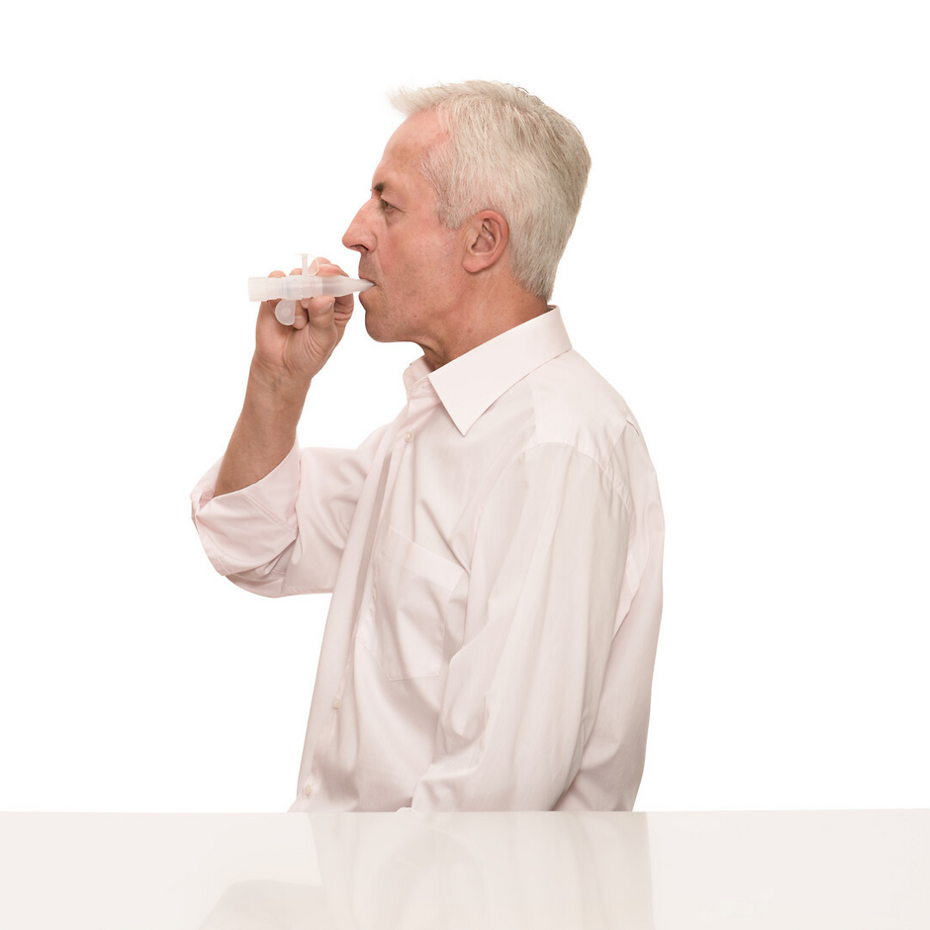
Angelika von Esebeck: Among other consequences, COPD, as a result of years of chronic inflammation, leads to loss of elasticity in the lung tissue with hyperinflation of the lungs. Aside from taking medication regularly, patients with COPD also benefit from techniques to reduce the hyperinflation of the lungs. Many patients feel as if they cannot breathe in because they become short of breath under exertion.
In fact, their lungs are full of used-up air. People with COPD often have difficulty breathing out this used-up air because their lungs have lost their elastic recoil. After they breathe out, the used-up air still occupies a large proportion of their lungs and they cannot breathe in enough fresh air.
This state is called hyperinflation of the lungs and is one of the reasons for the shortness of breath under exertion. We also train COPD patients to go from thinking “I can’t breathe in” to thinking instead: “My lungs are hyperinflated and I have to make sure I breathe out properly”. Ideally, measures to reduce hyperinflation, such as PEP therapy, should be used at the beginning of physical activity.
This is something we train patients to do in our practice in a range of everyday situations in which they exert themselves. It is essential that patients develop self-awareness and accurately assess their own individual exercise tolerance. We practise these skills with patients using visual analogue scales. Adjusting their speed under exertion is an important learning process. “I’ll just pop down to the cellar” is now slower with COPD. You can improve your performance with COPD and can train your fitness – but you must be more cautious than you used to be.
Breathing techniques such as the pursed lip technique and various PEP systems ensure that the airways remain wide when you breathe out and do not constrict, which is often the case with COPD. By dilating the airways, more air can be exhaled.
PEP breathing is important during exertion, but is also combined with various breathing exercises, such as the “bow and arrow” exercise. The patient can do this in the morning lying in bed or sitting at a table. This combined exercise offers multiple benefits: it reduces lung hyperinflation, moves the rib cage, and mobilises secretions. This combined exercise is suitable for anyone with COPD.
Angelika von Esebeck: It is important to activate the diaphragm because lung hyperinflation affects its function. The hyperinflation causes the diaphragm to sit low and its domed shape is flattened. It does not work (well) in this unfavourable position, making abdominal breathing difficult. An exercise that can help in this case is as follows: The patient lies on their back, uses a PEP system and has a weighted cushion on their abdomen. When they breathe out, the PEP and weight support the exhalation and when they breathe in, the diaphragm is trained. The weight on the abdomen can be individually adjusted between three and eight kilos.
Angelika von Esebeck works as a registered physiotherapist in Weßling, Germany. She specialises in the treatment of acute and chronic obstructive and restrictive lung diseases such as asthma, bronchiectasis, COPD, cystic fibrosis (CF), primary ciliary dyskinesia (PCD) and dysfunctional breathing disorders.
Note: The information in this blog post is not a treatment recommendation. The needs of patients vary greatly from person to person. The treatment approaches presented should be viewed only as examples. PARI recommends that patients always consult with their physician or physiotherapist first.
