Nik Linder has been a freediver for more than ten years. This time he has a report on his world record attempt – and the last breath before it all took off.
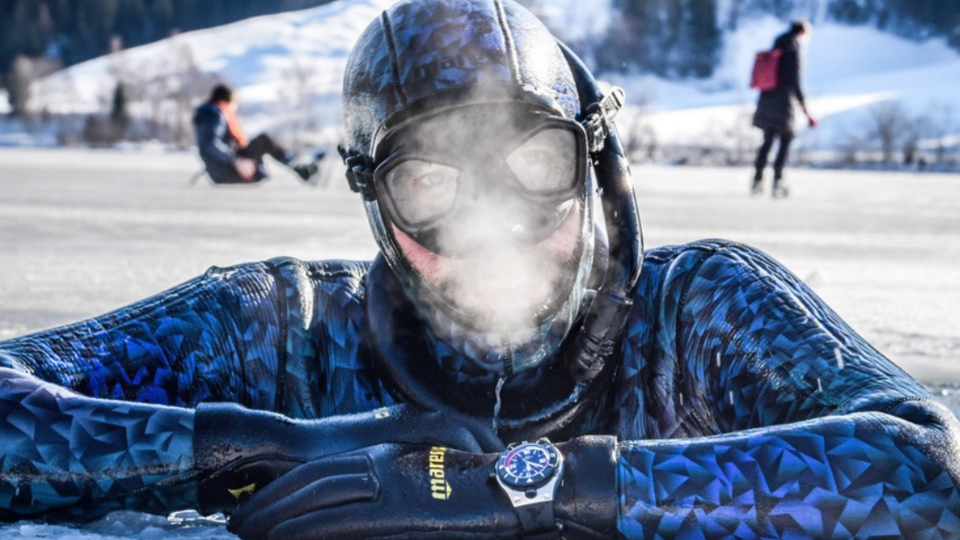
Nik Linder has been a freediver and breathwork trainer for more than ten years. This year, we are following him with the PARI blog and on Instagram. This time he has a report on his world record attempt – and the last breath before it all took off.
Header: Ivana OK
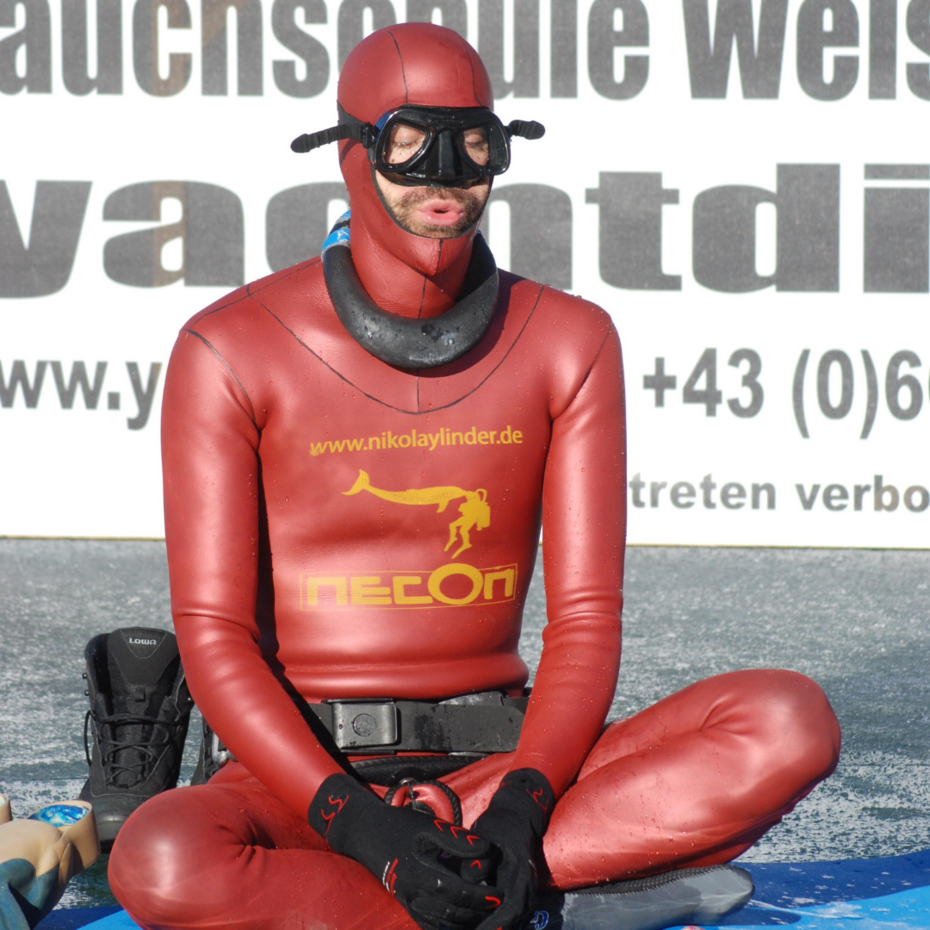
I have to squeeze my eyes shut: All around me are the snow-covered peaks of the Alps, dazzlingly bright around the Weissensee. The ice hole in front of me is, in stark contrast, jet black. I have to swallow hard. I have the words of my coach in my head: “Smile, then you’ll release happy hormones” I smile, slightly tense, but it’s a smile.
Yes, I want to enjoy this dive. It has been a long road to get here. When I later take my last, deep breath, I don’t have much choice other than to break the world record in under-ice freediving distance. The record is 100 metres and was set by the Austrian Christian Redl.
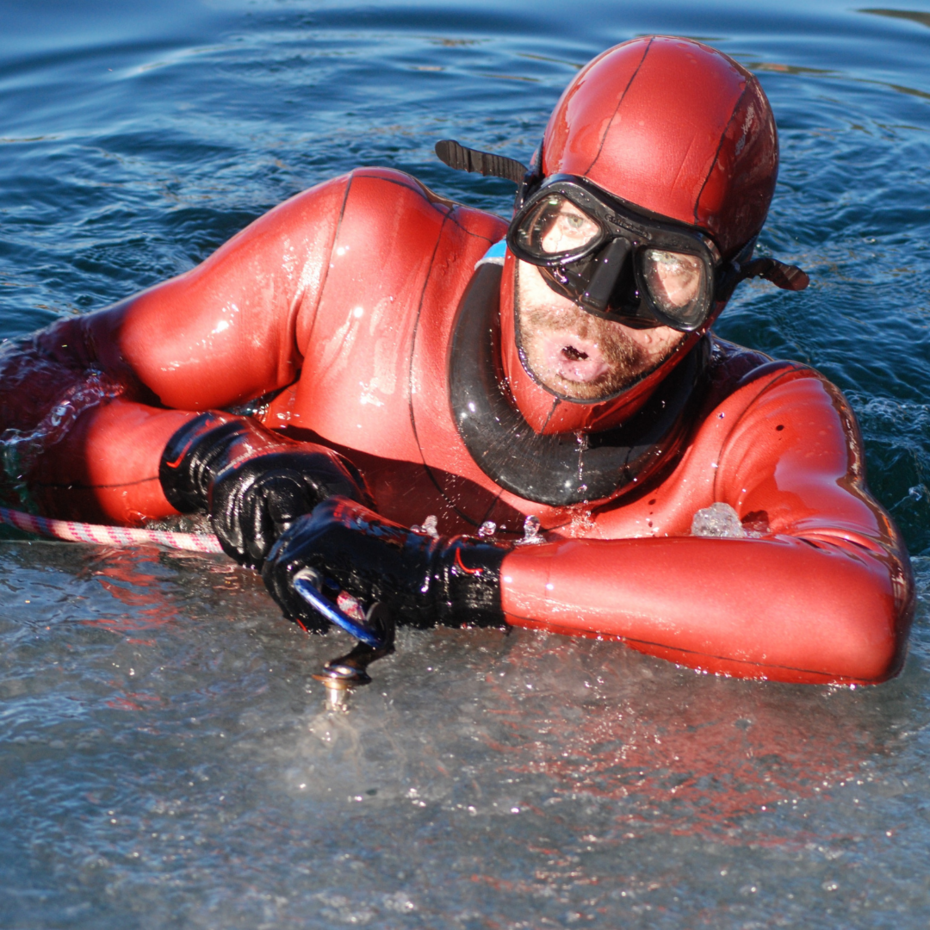
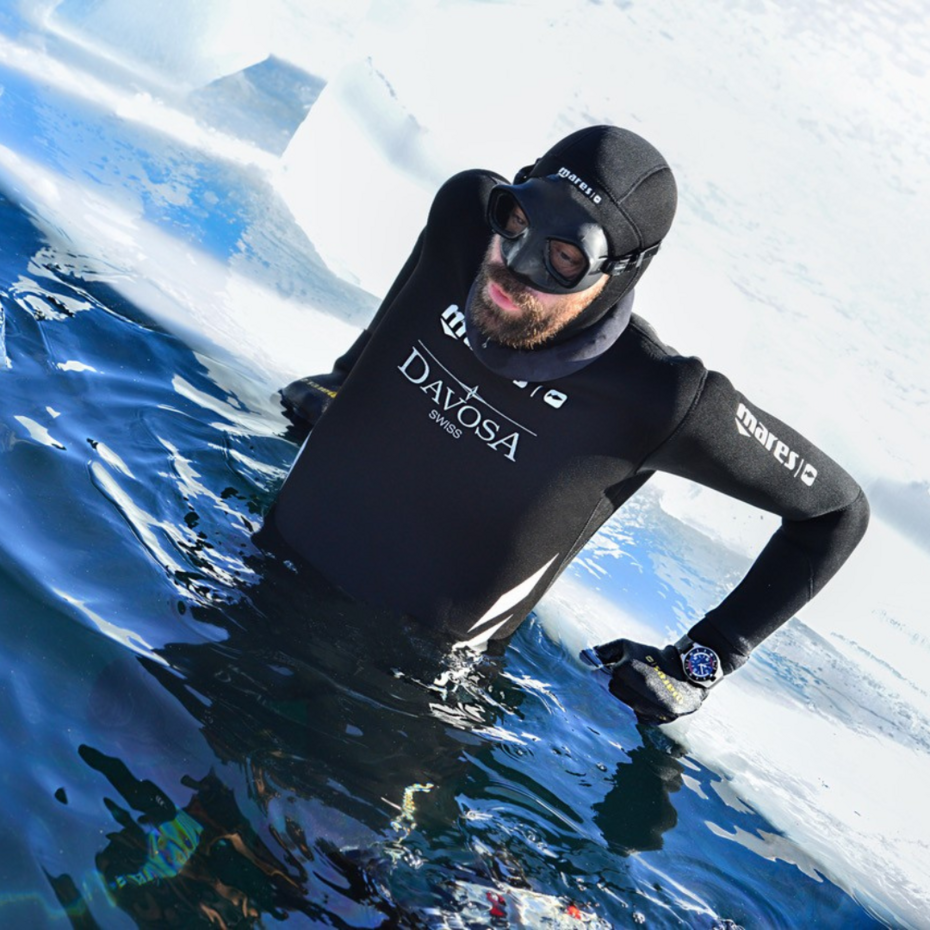
The Yachtdiver, the local diving school, has sawn ice holes at 108 metres apart. An emergency hole in the middle of the stretch would be my only escape if I ran into problems. But if there were any problems, they would not crop up until the end of the stretch. It’s either zero or hero.
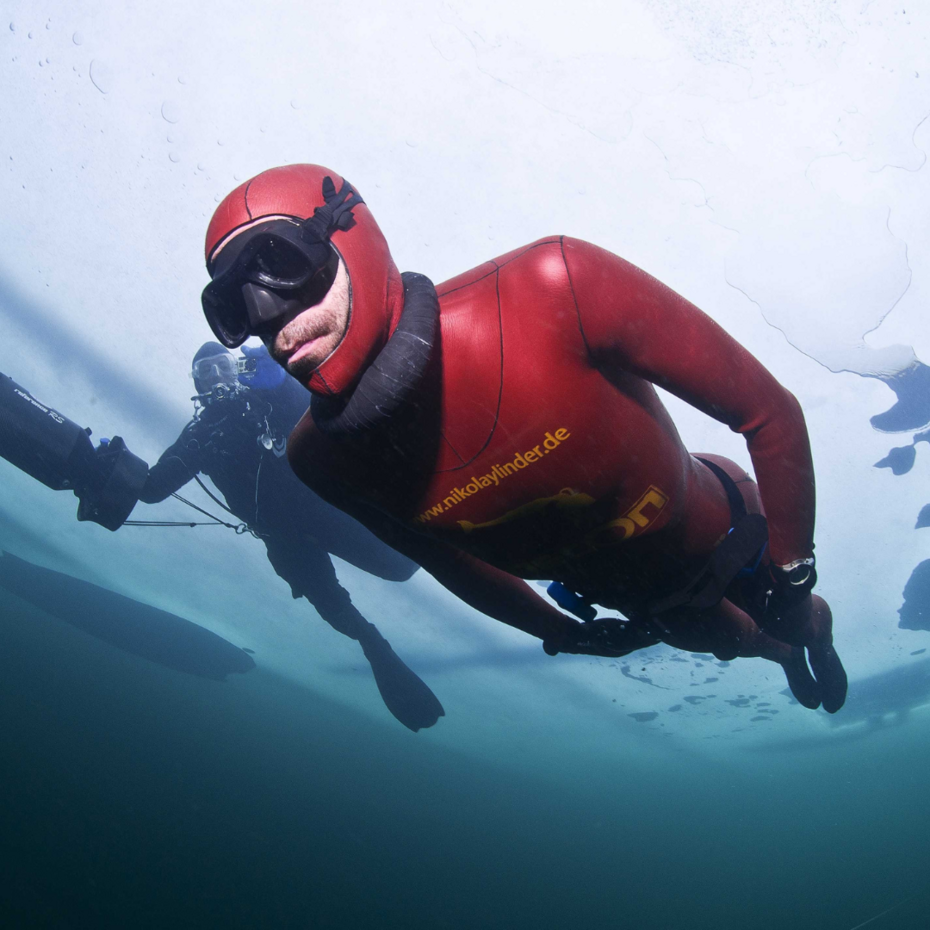
The route is marked with a thin fishing line. Good enough to keep you going in the right direction – but too thin to pull yourself along it. I am accompanied by two safety divers with diving gear, who are pulled by a scooter. My hydrodynamic posture and the way my monoflipper propels me forward means it would be impossible for them to follow me without this underwater torpedo. At the same time, they act as my camera crew because Guiness only recognises world records attempts if they are scrupulously documented.
My dive started over a year ago with the idea of breaking the world record. Back then, I owned the diving centre in Freiburg, a diving business with a diving school, a diving shop and a travel centre. Peak season was from April to October. That meant sales, diving training and diving trips at least six days a week and almost every evening.
While in these months I tried to train at least twice a week, this amount of training was only just enough to keep me fit – but not to improve. From October things got better and I had more time to train. I reached peak fitness by January or February.
The problem was that world championships and competitions are almost always in the summer, which was when I had no time. But in winter there was ice and a few crazy people who dived under the ice with one single breath. I was really excited the first time I heard about these records. I also wanted to be one of these athletes who are so strong both mentally and physically that they can blank out the cold, the dark and the closed and impenetrable layer of ice.
I planned to jump into the cold flooded gravel pits around my hometown in Freiburg as often as possible and to train. This would help me adapt to the slowly decreasing temperatures and gain plenty of experience diving in challenging conditions.
The more often I forced myself into the cold water, the less I would be surprised by the inhospitable conditions of the Weissensee. The worse the weather outside, the more prepared I felt. My goal of achieving the first world record under ice was so important to me that I never doubted it for a minute. And not once did I think I would be better off doing what my friends and acquaintances were doing – staying at home, all warm and cosy, or drinking mulled wine on the Christmas markets.
I felt that I was well-prepared because I had so many strenuous dives in inhospitable conditions under my belt. But there was one thing I could not prepare for in the lakes around Freiburg – diving under the ice. As great as it is to live in the warmest town in Germany, it is no great help to an ice-diver like me.
The height and the lower air pressure are among the hardest challenges. Lakes that are guaranteed to be iced over tend to be very high up, usually in the Alps. The cold has an important role to play. While the maximum water temperature is a chilly four degrees, directly under the ice – so about two metres down, just where I would be swimming – the water is only two degrees. I dive where the aggregate condition changes from liquid to solid, where water becomes ice.
The cold mountain air can also make a world record attempt harder or even rule it out from the outset. The Weissensee in Austria can see temperatures down to -15 or -20 degrees. In this cold air it would not be possible to attempt a world record. The cold air irritates the airways too much. That would make it impossible to breathe in enough air for the lungs to reach 100% capacity.
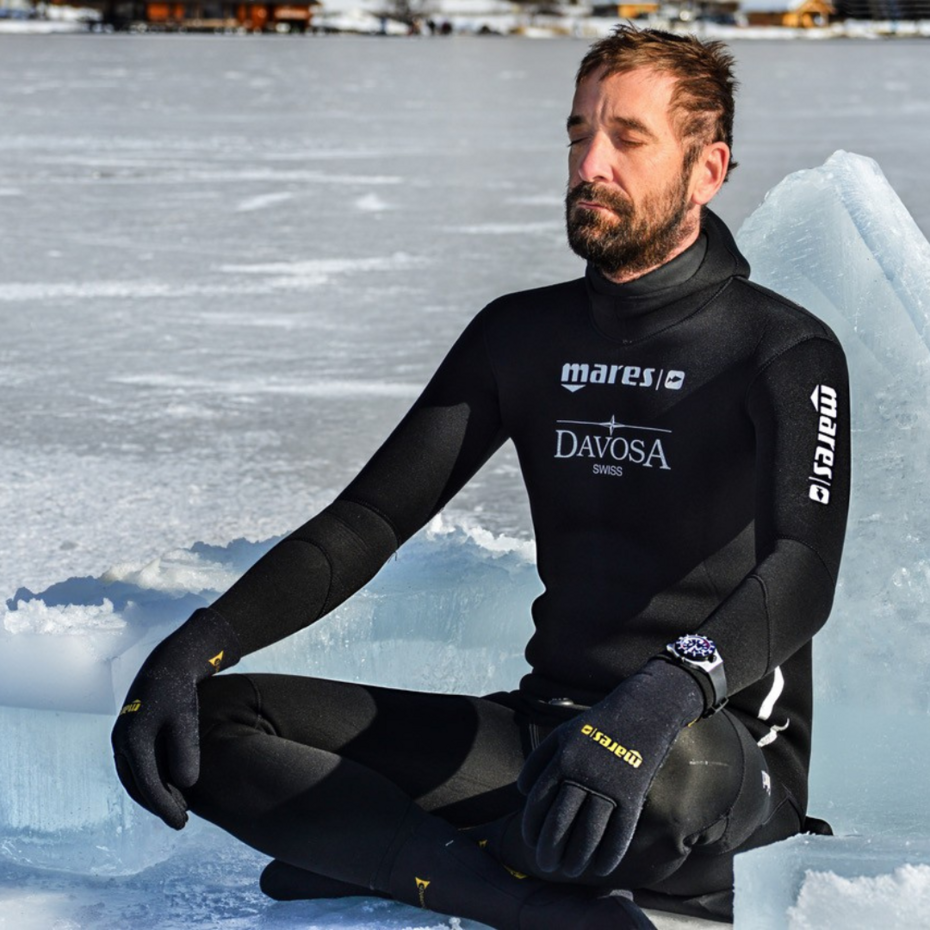
The greatest challenge is what is going on in your head. A freediver will go through two phases in a dive: the Easy Going Phase and the Struggle Phase. Everything is easy during the Easy Going phase – as the name suggests. As a diver, you are relaxed, the diving reflex lowers your heartbeat and focuses the blood supply to the essential organs: the heart, lungs and brain.
We find this phase very relaxing and meditative. Because we are not breathing, the “waste product” of our breathing, the CO2 is not exhaled. Once the CO2 reaches a certain threshold, the diaphragm contracts – and the urge to breathe sets in. And this is when it messes with your head. Your inner critic starts to get louder: “What are you doing here? This isn’t fun! It’s unhealthy! Stop this!” and so on.
As a freediver, you learn various relaxation techniques to stay calm despite the contractions. The bodyscan from mindfulness meditation is a popular technique: You keep your mind occupied by gradually perceiving the body and releasing any tension. And this relaxes body and mind. What is important is to keep a positive mindset and to concentrate less on what is missing – in this case, air to breathe. Instead, you rejoice in what you have: for example, a relaxed body, courtesy of the body scan.
I didn’t have faith in myself for my first world record. Would I be mentally strong enough to be able to deal with the doubts I was having? I was not sure. If I were to fall prey to negative thoughts, I ran the risk of panicking, which could be life-threatening under the ice. I tried to persuade myself. If I only said nice, friendly and kind things to myself all the time, my inner sceptic would never get a word in. That was my strategy.
Just before the record, I followed my routine to ground myself. When training for diving, I tried to perfect a few movement sequences to anchor my muscle memory and so I didn’t need to think about it. How I would start the dive, which speed and flipper stroke rate I would have, how I would surface from the water and how I would perform the important surface protocol for the official judges – I had trained all that hundreds of times and knew it inside out.
And although I felt well because I had trained intensively and with focus, and felt quite relaxed about the world record attempt, my neck was tensing up and I got a slight cold as happened before every important competition or national record attempt. At some point I noticed that these were signs of stress for me, because they disappeared almost instantly after the event.
What bothered me most is that before a record attempt everyone around me was apparently ill. Especially in winter it seemed that everyone near me caught a cold. I was almost paranoid about not touching door handles with my bare hands, I avoided talking to people who had a stuffy nose or a cold and withdrew from social situations a little.
Just to be on the safe side, I used my PARI SINUS2 more often before the record attempt to keep my airways clean and so that I could breathe through my nose. Dry air from central heating is especially unkind to my airways, which would very soon be called upon to deliver a peak performance.
I was sitting in the ice hole and smiling. After the attempt some people said: “Boy, you were so confident, you were so positive – you were even smiling.” But truth be told, I was not all that confident. My thoughts were more like “Smile, it can’t do any harm”. Before I slid into the water, I told myself once more: “Nik, you have been on a long journey to get where you are now. You are healthy, you are feeling well, and you are perfectly prepared. The conditions are ideal. Your safety divers are there and are very reliable. Off you go! You’ve got this!”
Anyone who wants to break a world record has to reckon with the fact that it might not work. The more prepared you are, the more likely the attempt will be successful. But success is not guaranteed. If you fail, which I have also found out from experience, it can help if you can’t blame yourself afterwards: because you didn’t train enough or your training was not disciplined enough. If you can’t accept that you might fail, you shouldn’t make an attempt like that.
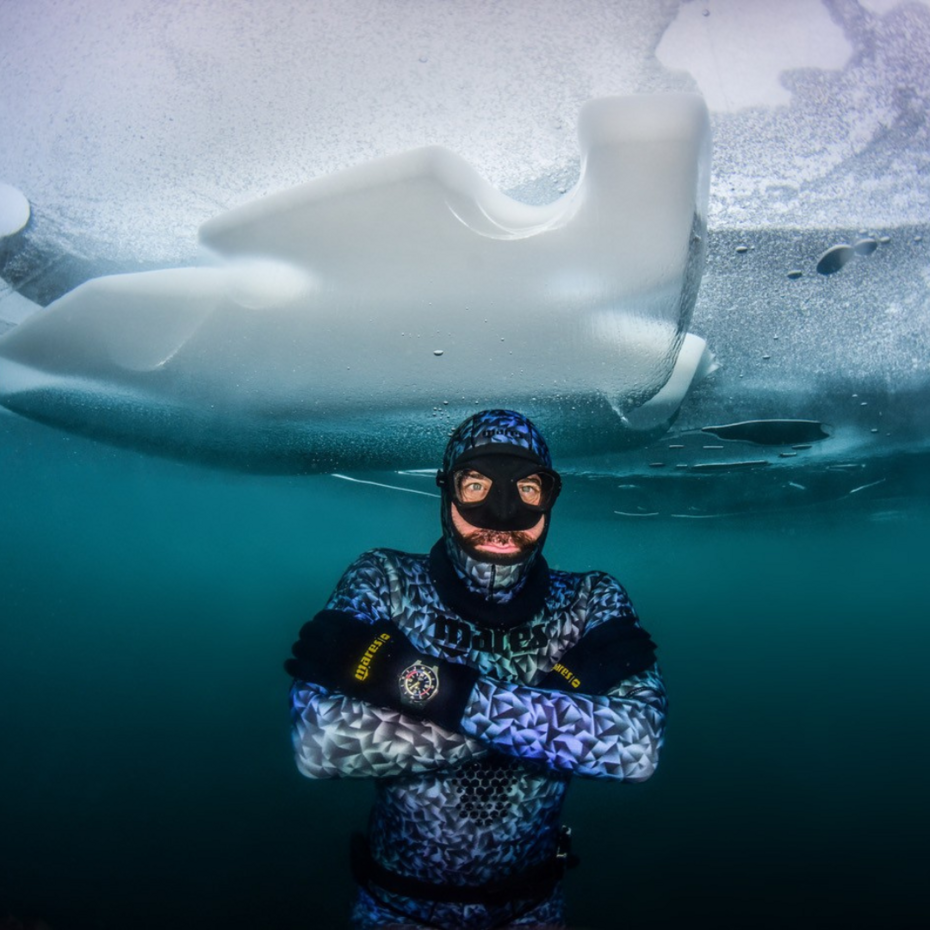
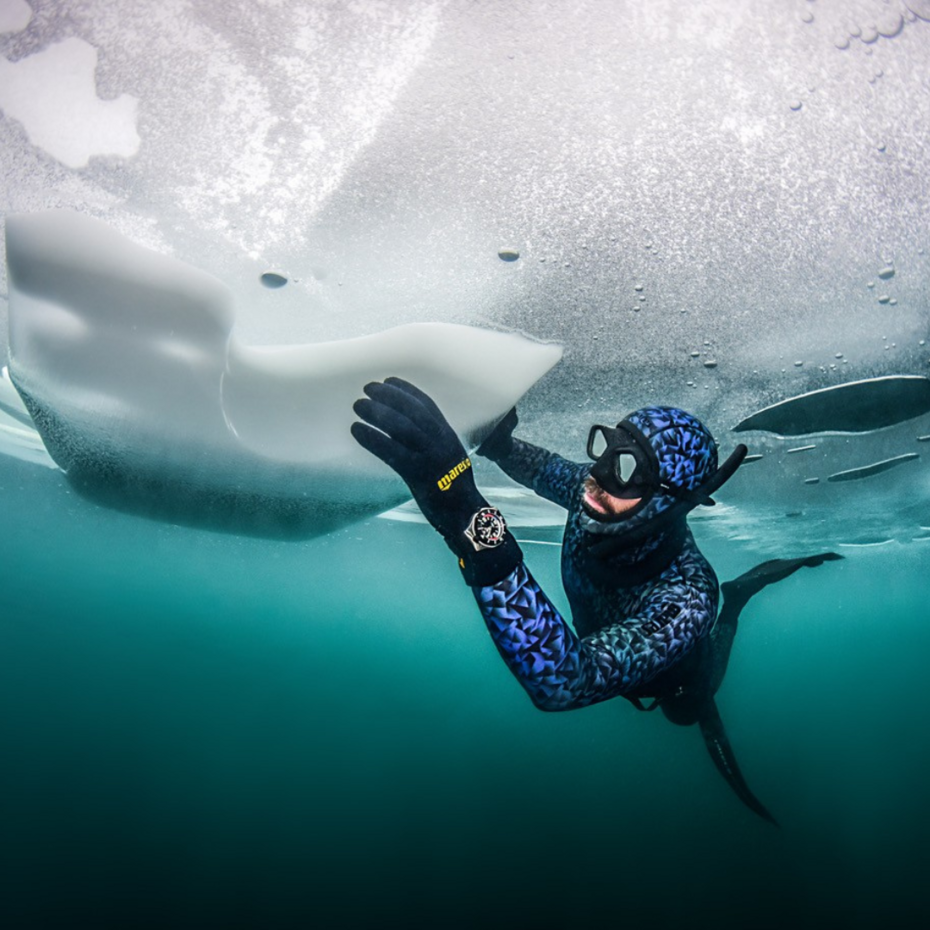
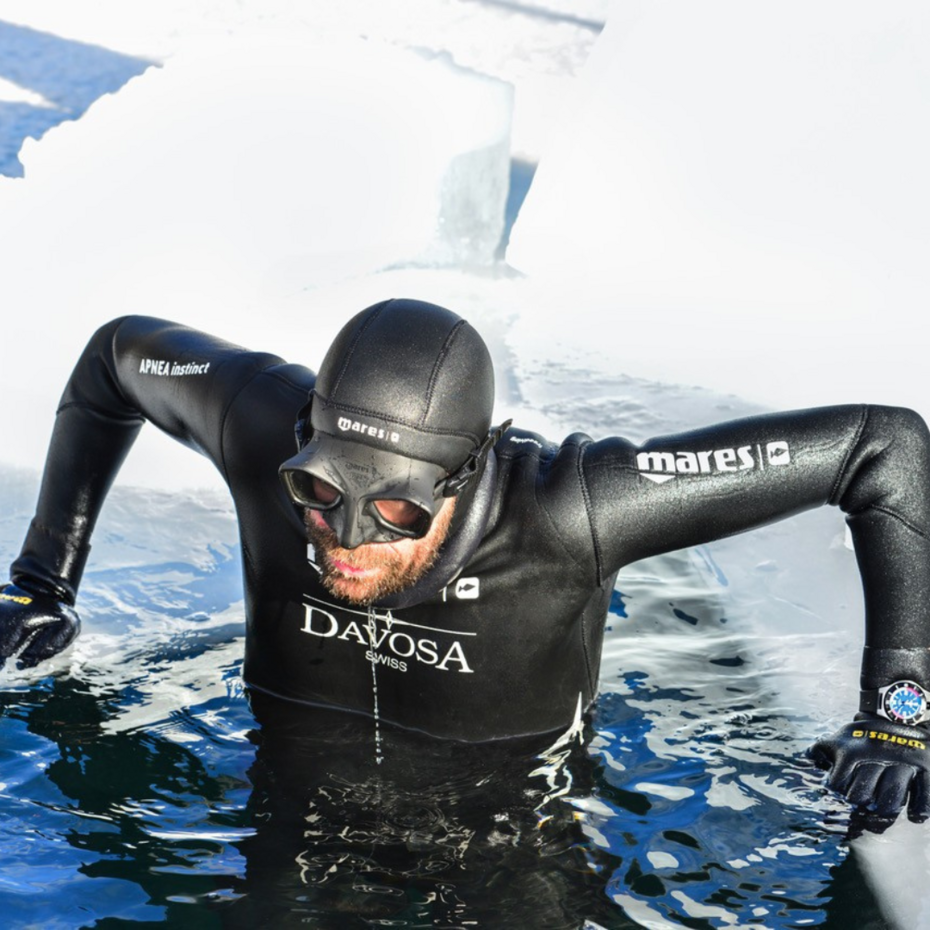
I fill my lungs one last time with the cool mountain air: first in the abdomen and then in the chest. Until my lungs are 100% full. Then I slide into the water and start the dive. My eyes get used to the twilight very quickly. What was so dark and inhospitable before is now fine.
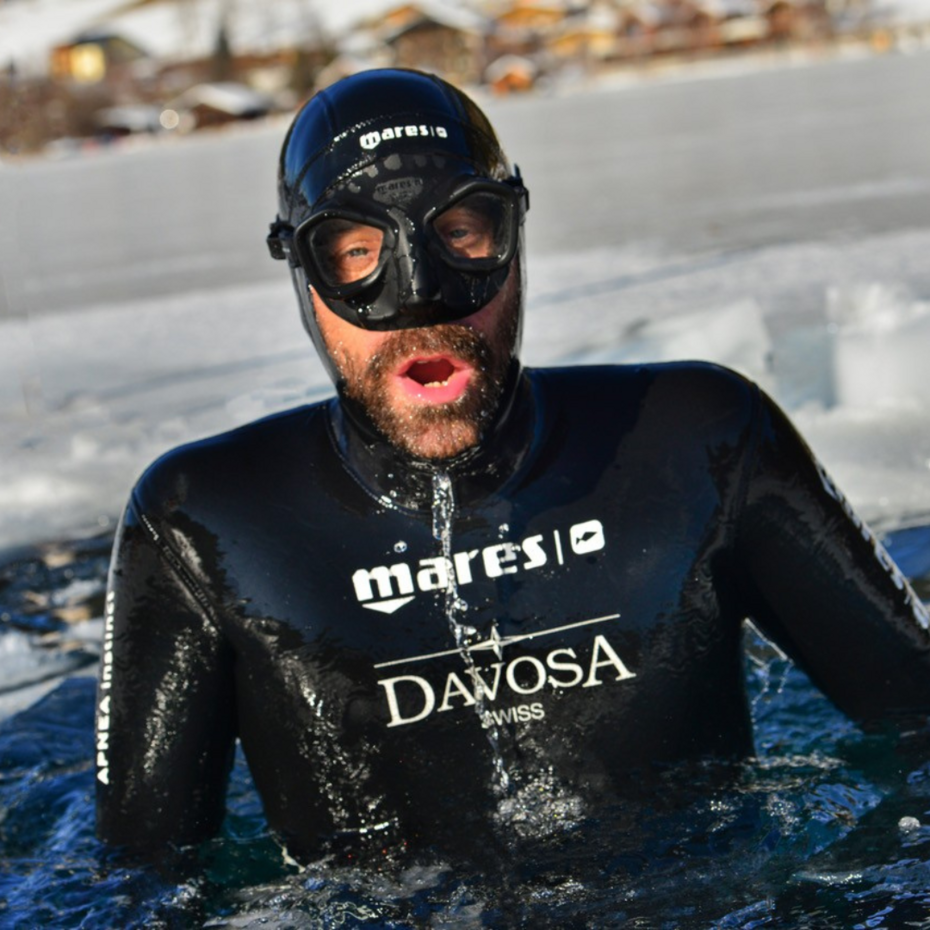
I beat my flippers to dive further and further under the ice along the fishing line. And I am kind to myself: “You’re doing a great job Nik! Stay relaxed, today is a good day, stay calm!” After less than two minutes I reach the ice hole and surface at the end of the line.
I take three to four breaths where I inhale quickly, briefly hold my breath, and then breathe out through pursed lips to make sure my bronchial tubes stay open. This lets me get oxygen into my body quicker. Within 15 seconds I manage to end my protocol: Remove my mask, bring my thumb and index finger together to form an okay sign and then to say, “I am okay”.
After 30 seconds the two judges from the international association of freediving AIDA show me a white card – the sign for a valid record attempt. At the end, I was the first person ever to manage a stretch of 108 metres under ice.
Nik Linder holds several world records in under-ice distance diving and has broken several national freediving records. The enthusiastic lake explorer was the first person to swim around Lake Constance without support. Nik works as a breathwork and relaxation trainer and has developed a relaxation method called “Relaqua” which is deeply rooted in freediving, respiratory yoga and mindfulness. As an author, speaker and freediving trainer, he works primarily in German-speaking countries, but also travels all over the world.
Note: The statements made in the report are the individual view of the persons reporting. They do not necessarily reflect the PARI view or the general state of science.
