
Taking short, rapid breaths – i.e. shallow breathing – can sometimes help patients with respiratory disease. We explain when to use it and how it works.
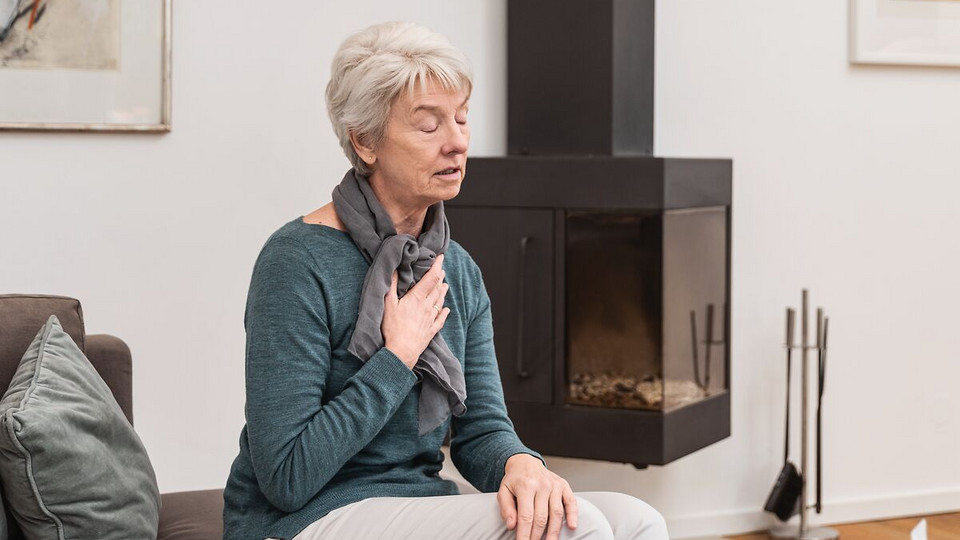
It’s a familiar scenario: You are sitting on the train, in the cinema or in the restaurant and you are suddenly overcome by the urge to cough. Many people with respiratory diseases find this situation unpleasant and embarrassing.
An urge to cough sometimes starts spontaneously for no apparent reason. Sometimes it occurs due to exertion, talking quickly, excitement or panic – situations in which you breathe in too fast and not deeply enough – or during respiratory physiotherapy. For people whose lungs have been affected by long-term hyperventilation (overly rapid or deep breathing), excessive coughing can put further strain on already damaged lung tissue.
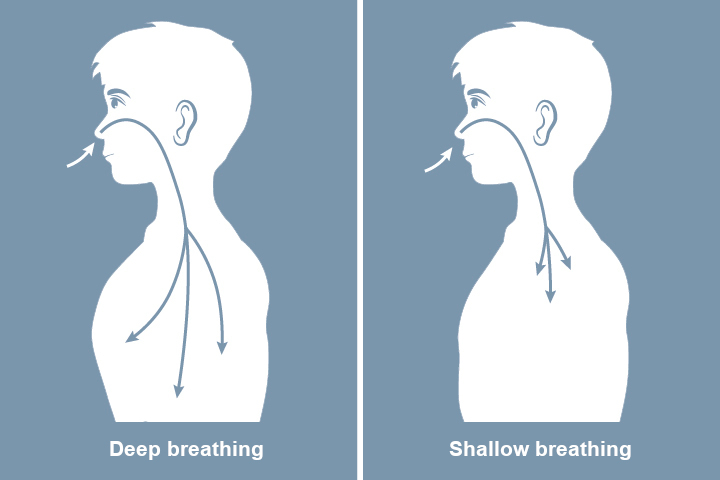
Only use shallow breathing as a short-term breathing technique and never as your “normal” breathing. There are several ways to suppress an urge to cough and ease a coughing fit. Here we introduce you to the “shallow breathing” technique. Breathing quickly and with shallow breaths can help suppress the urge to cough and manage a coughing fit.
Shallow breathing is not normally recommended, even if it sometimes occurs in people with lung disease or after exertion, because it is the only possible way to breathe. For this reason, people with lung disease (and everyone else too) should ensure they breathe as deeply as possible. If you find that your breathing is consistently shallow, you should see your doctor to find out why.
Patients with mucus and chronic obstructive pulmonary disease (COPD) can use shallow breathing to suppress the urge to cough and to prevent coughing attacks. It is best to learn or perfect this breathing technique with the help of a respiratory physiotherapist.
NB: Shallow breathing should only be practised for short periods – and only as a deliberate and controlled breathing technique.
PARI still recommends long, slow, deep inhalations when taking any medication via our nebuliser systems or spacer devices.
This article was written in cooperation with the experienced physiotherapist and respiratory therapist Rita Kieselmann, who has been working in this field since 1974. Her focus is on the treatment of children and adults with chronic respiratory diseases.
Rita Kieselmann is the founder of the Physiotherapy working group in the Mukoviszidose e. V. (Cystic Fibrosis Association in Germany). She has also developed self-help techniques for clearing mucus such as modified autogenic drainage and others.
Note: The information in this blog post is not a treatment recommendation. The needs of patients vary greatly from person to person. The treatment approaches presented should be viewed only as examples. PARI recommends that patients always consult with their physician or physiotherapist first.