
Chest Physician Prof. Fischer takes a look at the causes of and therapies for mucus in COPD and bronchiectasis, explains how they differ from each other – and shares some practical tips.
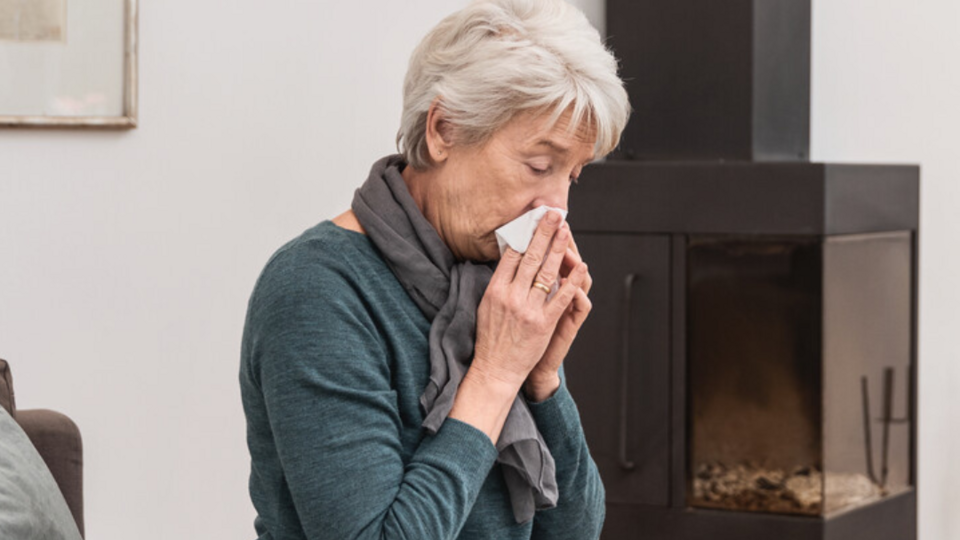
Stubborn mucus in the airways is a distressing symptom for many people with COPD or bronchiectasis. We interview Chest Physician Prof. Rainald Fischer, who explains why this mucus develops, what the differences in mucus production are between the two diseases and the most effective ways to clear the mucus. As well as explaining the medical background, he shares practical tips for managing daily life with the condition.
Prof. Fischer: The main reason for mucus production is chronic inflammation in the airways. The inflammation triggers the cells that produce the mucus to step up production. The lungs produce mucus to help move harmful germs upwards and out of the lungs, along with the mucus. Mucus production is a natural reaction of the lungs to fight off infections.
This inflammation is ‘chronic’ in chronic obstructive pulmonary disease (COPD) and bronchiectasis. This leads to mucus being produced all the time. With bronchiectasis, there is the added problem that bacteria such as Staphylococcus aureus or Pseudomonas aeruginosa that often lurk in these dilated airways can make the inflammation worse. This can lead to even more mucus being produced.
Prof. Fischer: The key difference is that in patients with bronchiectasis, bacteria build up in the airways can cause more inflammation, which makes the lungs produce more mucus. Both diseases feature underlying chronic inflammation, but in bronchiectasis, the bacteria make the situation worse.

Prof. Fischer: Excess mucus in COPD is not a sign that it is severe – it is just a symptom of the disease. There are patients with “dry” COPD (although “dry” is a bit of an exaggeration), who hardly produce any mucus, and then there are others who produce a great deal. Smokers and ex-smokers in particular produce more mucus.
People who have COPD not associated with smoking, e.g. caused by severe and frequent infections in childhood, often have less mucus. So mucus production with COPD is not necessarily a sign of how severe it is. Nonetheless, a buildup of mucus in the airways is unpleasant, as it makes it harder to breathe and triggers a cough.
Prof. Fischer: It is important to treat the underlying disease. For COPD, there are drugs available like anticholinergics and inhaled corticosteroids. Bronchiectasis – irreversible widening of the airways (bronchi) – causes irreversible changes to the lungs. Bacterial infection can be treated with antibiotics – orally, intravenously or, in exceptional cases, inhaled. Some medicines e.g. mucolytics help thin mucus and make it easier to clear from the airways, which can help relieve symptoms. Inhalation therapy with a nebuliser is particularly suitable and effective in this case.
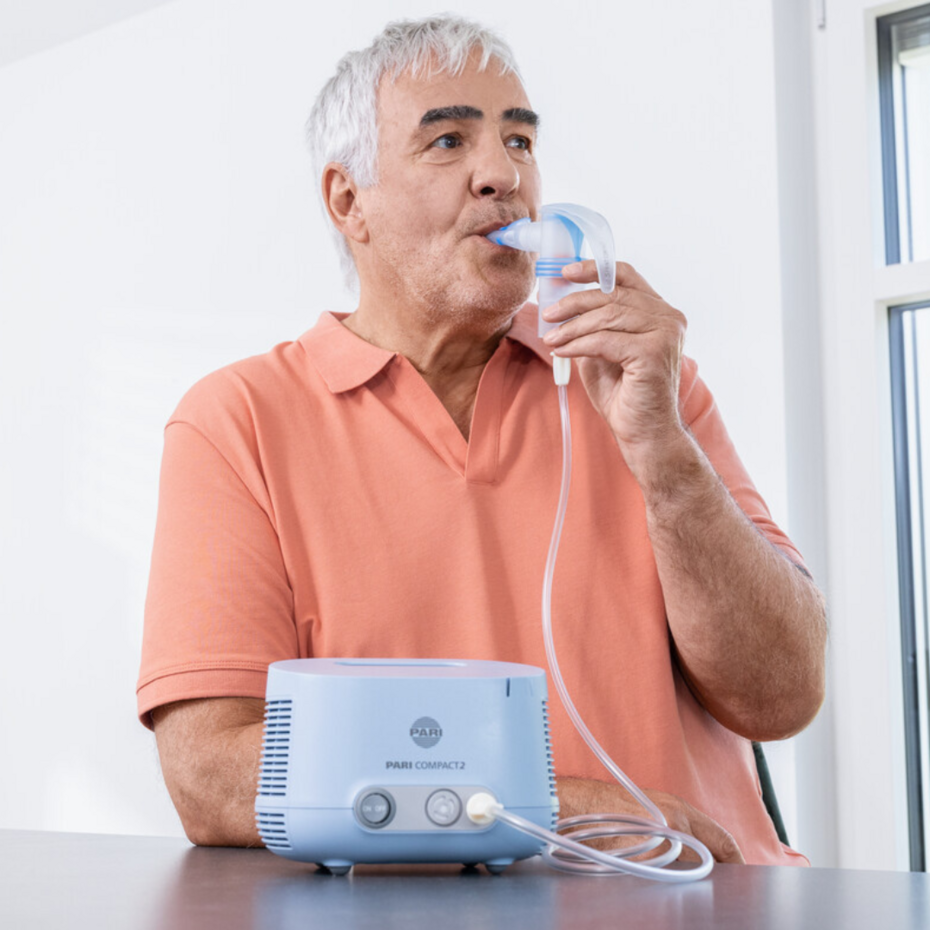
Prof. Fischer: The ideal option is a 3 or 6 percent hypertonic saline solution, as it efficiently loosens mucus. Some patients find that too irritating, in which case a 0.9 percent saline solution can be used via nebuliser. NaCl 0.9% moistens the airways which can help mobilise the mucus out of the lungs so it can be coughed up. This is what patients report all the time. In this case it is important that the inhalation solution is inhaled with a nebuliser so that the droplets are small enough to reach the lower airways.
Inhaling saline solutions over hot steam has no effect – not only for loosening mucus in COPD and bronchiectasis, but in general as well. It is a prevailing myth, as steam inhalation is not suitable for treating the bronchial tubes.
Prof. Fischer: Yes, PEP systems are helpful because they mechanically get the mucus moving and keep the airways open. PEP systems are especially helpful in patients with bronchial collapse – when the airways collapse when you breathe out – which means the mucus can no longer be transported out of the lungs. The vibrations generated by the PARI O-PEP are especially helpful at loosening mucus.
Prof. Fischer: It can happen with either of these diseases. Many patients with bronchiectasis also have COPD. There are also patients with bronchiectasis and normal lung function – but that is less common.
Prof. Fischer: Yes, if the sputum turns from pale yellow to dark green, this indicates a bacterial infection. Reddish sputum or coughing up blood are also warning signs. It is essential that you see a doctor without delay.
Prof. Fischer: To prevent mucus production in cases of COPD and bronchiectasis, it is important to properly stick to their long-term therapy. It is also important to avoid smoking – and that includes passive smoking – and to avoid exposure to fine dust, such as caused by open fires, woodburning stoves or busy roads.
It is also worth identifying any potential allergies, as these can also promote mucus production. Otherwise, mucus production is unfortunately a chronic problem requiring ongoing treatment to loosen the mucus such as nebuliser therapy and respiratory physiotherapy.
Prof. Fischer: We generally recommend doing nebuliser therapy with saline twice a day. This can be upped to three times a day if you have an infection or are producing more mucus than usual, for example in cough and cold season or if you have a viral infection. The frequency should be adapted: If you do not have a buildup of mucus, you can do the nebuliser therapy less often. More frequent inhalation therapy is not going to do any harm but it does take up more time. Respiratory therapy with PEP systems and the use of breathing techniques such as autogenic drainage or the pursed lips technique can also help better mobilise the mucus.
Prof. Fischer:
Prof. Rainald Fischer is a specialist in private practice, with a subspecialty in lung and bronchial medicine, emergency medicine, sleep medicine and allergy medicine in Munich, Germany. Before that he worked as a Senior Physician at the Munich University Hospital. Prof Rainald Fischer is a founding member and president of the German Society for Mountain and Expedition Medicine, and also a member of the German Cystic Fibrosis Medical Association.
Note: The information in this blog post is not a treatment recommendation. The needs of patients vary greatly from person to person. The treatment approaches presented should be viewed only as examples. PARI recommends that patients always consult with their physician or physiotherapist first.