
Coughing can be exhausting. Here are five home remedies that may help ease your symptoms and make you feel more comfortable.

Coughing can be strenuous and annoying. Home remedies for coughing (especially for a dry cough) may help to ease your symptoms. So you can help yourself feel better. Which home remedy to choose depends on the type of cough and what triggers it.
Home remedies for a cough do not fight what is causing the cough; nor do they cure it. All they can do is help to loosen the mucus, reduce the urge to cough and help support the healing process. Home remedies for a cough are in no way a substitute for medical treatment.
If you have a severe, persistent or chronic dry cough, or if you have a cough that is accompanied by pain, fever, yellow/green or even bloody sputum, you should seek urgent medical attention to investigate the cause.
To naturally soothe your cough, you could try the following at home.
One of the most popular home remedies for a cough is to drink herbal tea – and rightly so. Firstly, drinking helps in general to liquify the mucus and keeps the mucous membranes moist from the inside out. Moist mucous membranes are essential for good respiratory health.
Dry mucous membranes, on the other hand, do not have the protective barrier they need to fight pathogens. Also, dry bronchial mucous membranes tend to become irritated more quickly, which can either cause or exacerbate a dry cough. The warmth of the herbal tea is also soothing.
Stick to no more than two cups of green tea, fruit tea or herbal tea a day if you are unsure about an herb’s potency and make sure to use a trusted brand. Read the ingredients carefully to avoid unexpected allergens or hidden additives.

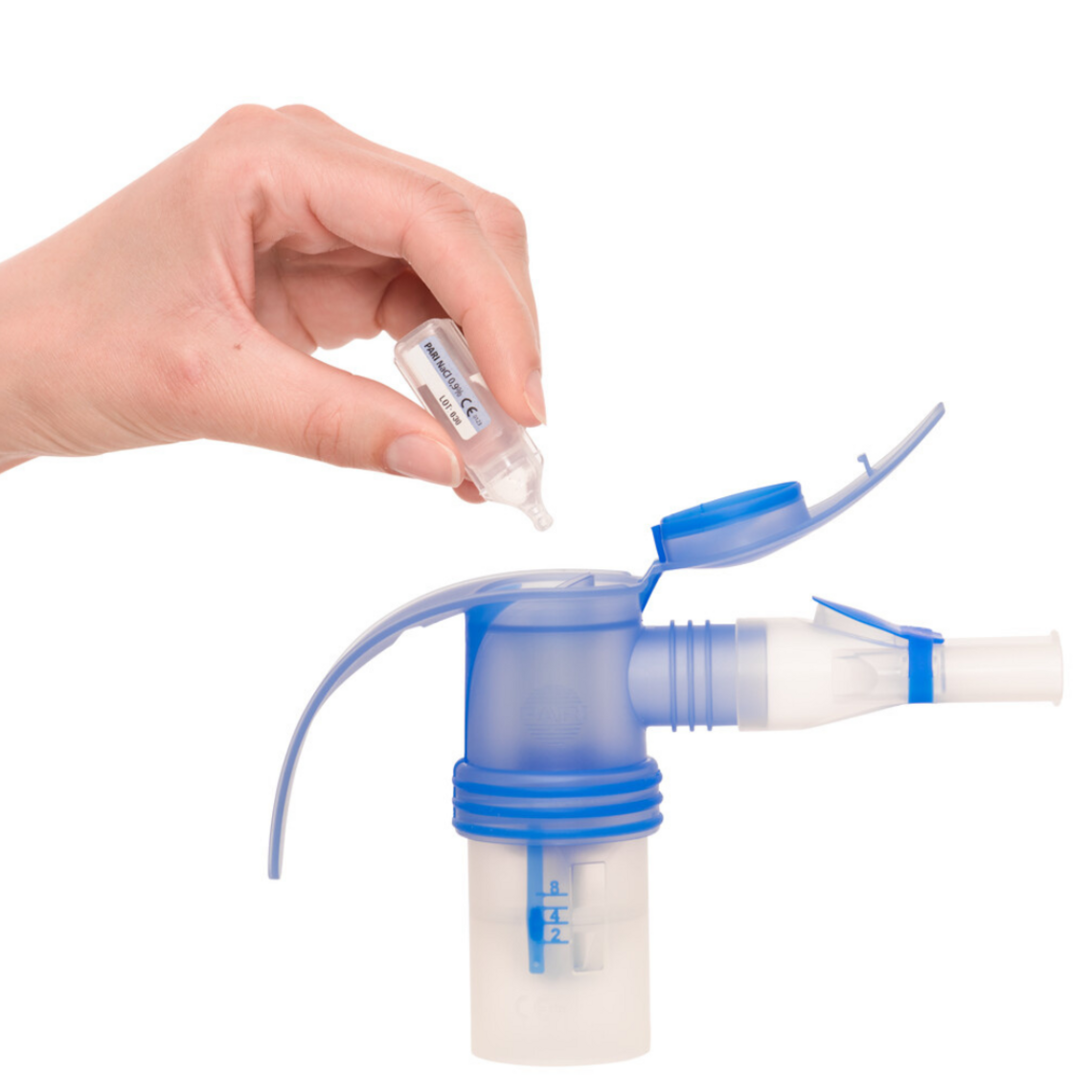
Nebuliser therapy with saline solution may help for a cough, because inhalation therapy is a tried and tested method for treating respiratory diseases. This is the most direct delivery method as the active agents reach where they are needed, i.e. the lungs.
The mist from a saline solution only reaches the bronchial tubes if it is generated by an inhalation device with a nebuliser such as the PARI BOY® Go. The inhalation device disperses the saline solution in droplets fine enough to enter the lungs.
The soothing inhalation therapy takes less than 5 minutes with a 2.5 ml ampoule and, depending on the inhalation solution, moistens the lungs or also acts as an expectorant.

Inhaling medically produced saline solutions with a nebuliser device is just as natural as inhaling steam – and it is more effective and more hygienic. The inhalation solutions are manufactured in a sterile setting and are packed in a clinically clean environment. This ensures that you do not breathe in viruses, bacteria or other pathogens (which could happen if you mix saline solutions yourself).
There are saline solutions with different salt contents:
And also: The myth that inhaling hot steam fights a cough is a persistent one. But this home remedy only helps against complaints of the upper airways – i.e. the nose and throat – and not a cough caused by an infection or irritation of the bronchial tubes.
The steam droplets are too large to reach the lungs. The steam does not hold the salt dissolved in water and transport it to the bronchial tubes. The salt remains behind in the pot. In children, there could also be the risk that they may burn themselves on the hot steam.
Often neglected, but effective and very natural: You can alleviate your dry cough with your own breathing – with a twofold effect. Firstly, there are breathing techniques with which you can suppress the dry cough and keep it under control. Secondly, special type of breathing can allow you to gently breathe out the secretions instead of coughing them up if you have a cough with mucus.
And then special exercises can mobilise the mucus in the bronchial tubes and naturally reduce the cough.
Breathing trainers such as the PARI PEP S-System or the PARI O-PEP also help to release the secretions so that they’re easier to cough up.

A dry cough followed by a productive cough can be symptoms that go hand-in-hand with sinusitis. The cough is caused by nasal secretions trickling down your throat and reaching your cough receptors, which is what makes you cough. A cough is a protective mechanism that stops the mucus entering your lungs.
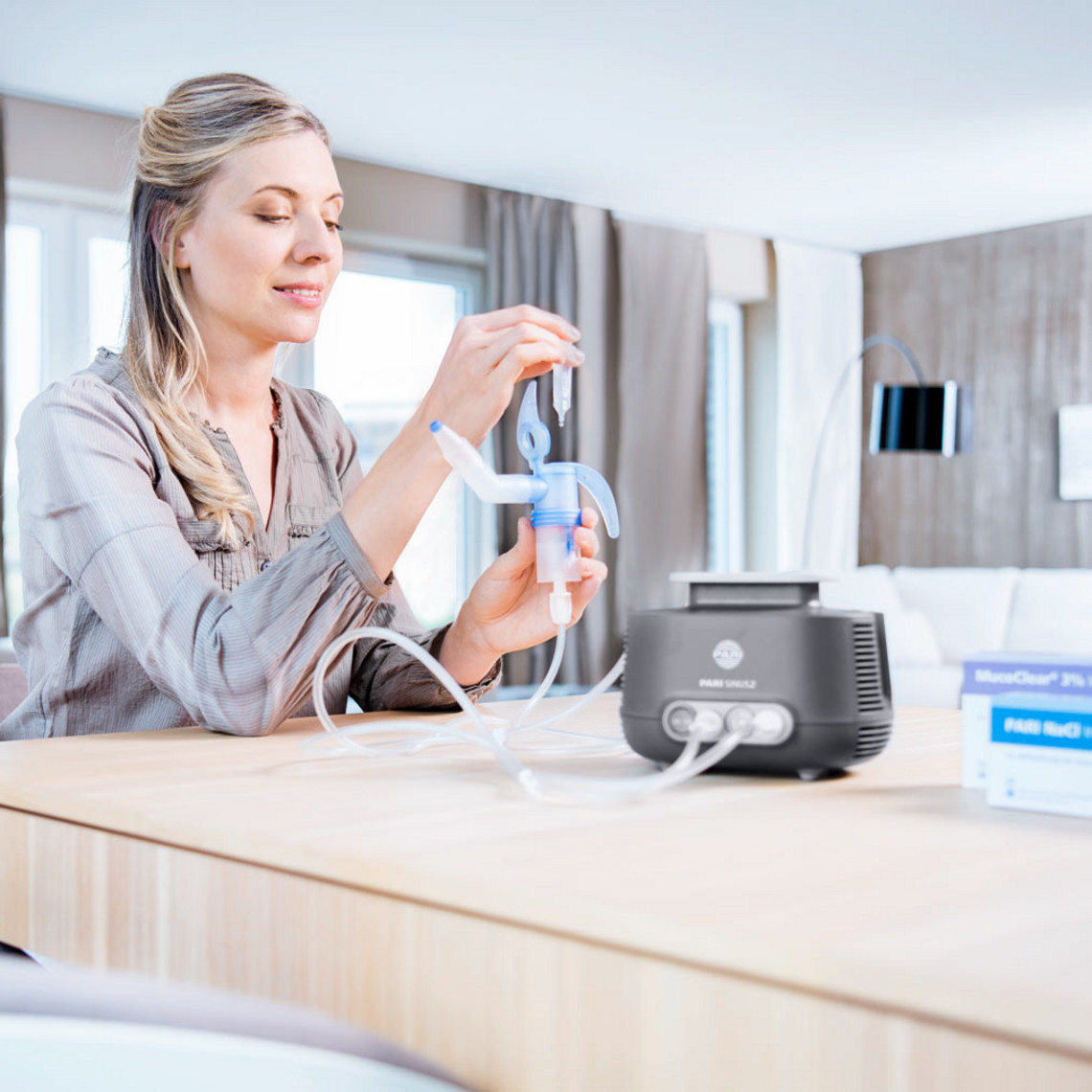
Using a PARI SINUS2 device with 0.9% saline may provide some relief, as it moisturises and cleans the nasal passages.
Moist heat can have a relaxing effect on the chest muscles, to stimulate circulation and help to release the mucus in the lungs. Thanks to its relaxing effect on the muscles, moist heat could be a good home remedy for relieving the pain of coughing.
How to make warm wraps:
Once the towel has cooled down, remove it and, if necessary, prepare the next chest wrap.
A simpler method is to use a towel and a hot water bottle:
REMEMBER for moist heat: Do not use warm wraps if you have a fever or acute inflammation.

Note: The information in this blog post is not a treatment recommendation. The needs of patients vary greatly from person to person. The treatment approaches presented should be viewed only as examples. PARI recommends that patients always consult with their physician or physiotherapist first.