
Autogenic drainage (AD) is a breathing technique used to loosen and transport mucus from the bronchi, making it easier to cough up. It can be used by people with chronically blocked airways – such as those with cystic fibrosis, chronic bronchitis, COPD or primary ciliary dyskinesia (PCD) – as part of their respiratory therapy. It can also be useful after pneumonia.
Physiotherapist Gemma Stanford explains the benefits of the technique and explains how to perform autogenic drainage.
With autogenic drainage you optimise airflow within your airways by adapting your breathing. This helps to move mucus from the smaller airways further down in the lungs to the larger airways, where it is easier to clear. The AD style of breathing is slow and gentle – like sighing.
Make sure you clear your nose and upper airways before starting your breathing exercises, a gentle blow of your nose will help optimise your clearance.
AD is usually started by completing a “test” or “diagnostic” breath which helps to identify where mucus is sitting within the lungs: e.g. in the large airways nearer to the throat ready to be huffed or coughed out, or lower down in the smaller airways (where more breathing exercises will be needed to move the mucus into the larger airways to clear it).
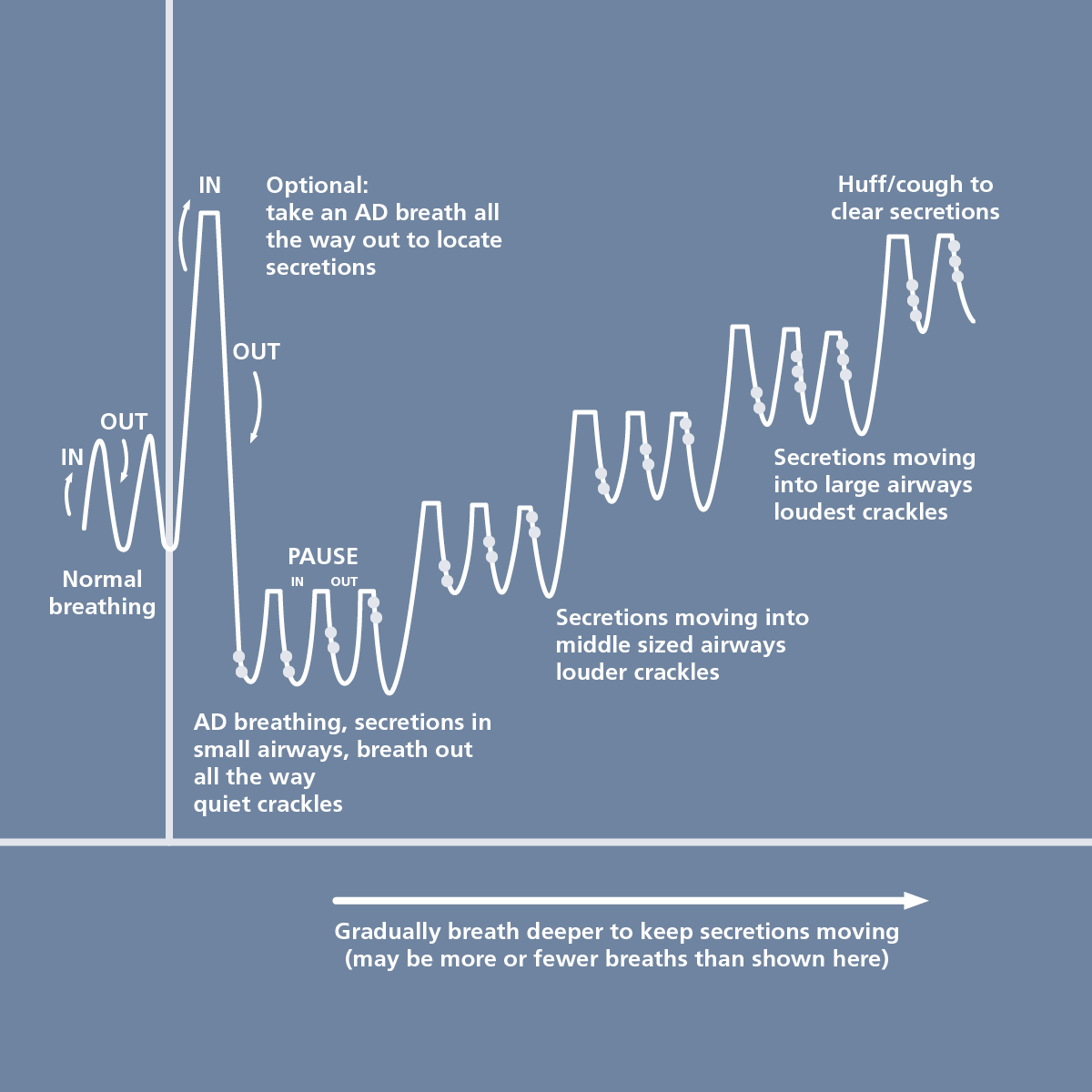
For each cycle of AD that you complete you will not always need to breathe all the way out to start, as your mucus will begin to move up your airways and you may find you will hear the crackles or rattles sooner on your breath out. You can then just breathe out to where you hear or feel your crackles and start breathing in a little more from that point, keeping your breath medium-sized and your airflow gentle.
Input for this article was given by Dr Gemma Stanford, Clinical Specialist Physiotherapist at the Royal Brompton Hospital, London, UK.
Note: The information in this blog post is not a treatment recommendation. The needs of patients vary greatly from person to person. The treatment approaches presented should be viewed only as examples. PARI recommends that patients always consult with their physician or physiotherapist first.
An article written by the PARI BLOG editorial team.
© 2026 PARI GmbH Spezialisten für effektive Inhalation
